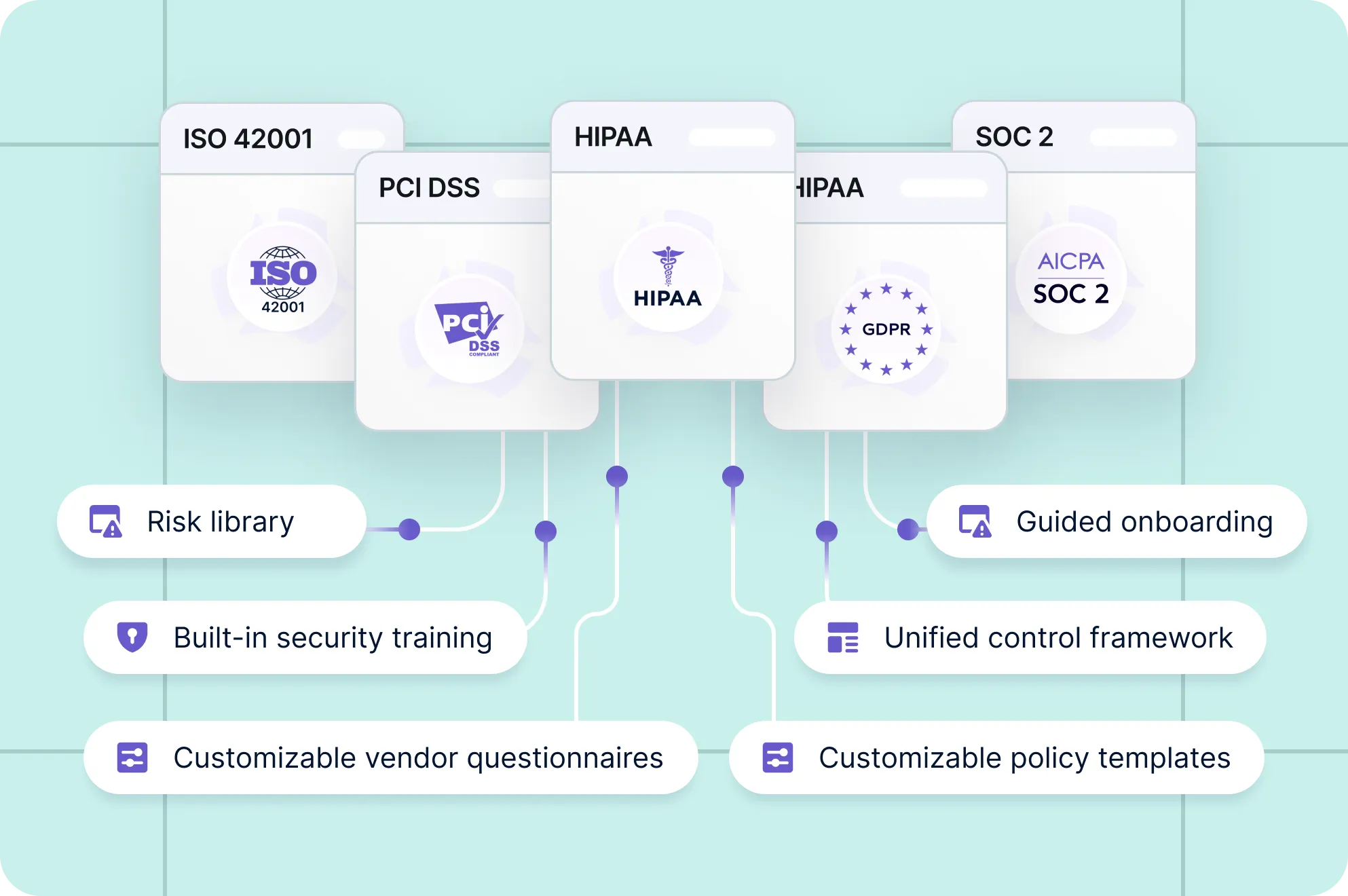
"Scrut helped our company navigate the complexities of SOC 2, ISO 27001, HIPAA, GDPR, CCPA, and PCI compliance with ease.”

Identify gaps, implement controls, and monitor your HIPAA compliance posture continuously with expert guidance at every step.

























%201.webp)



"Scrut helped our company navigate the complexities of SOC 2, ISO 27001, HIPAA, GDPR, CCPA, and PCI compliance with ease.”

.webp)

The platform connects with a wide range of tools for continuous monitoring, which makes compliance easy to manage.

.webp)
Scrut made our audits smoother and multi-framework compliance more efficient.

Connect Scrut to your tech stack via native integrations

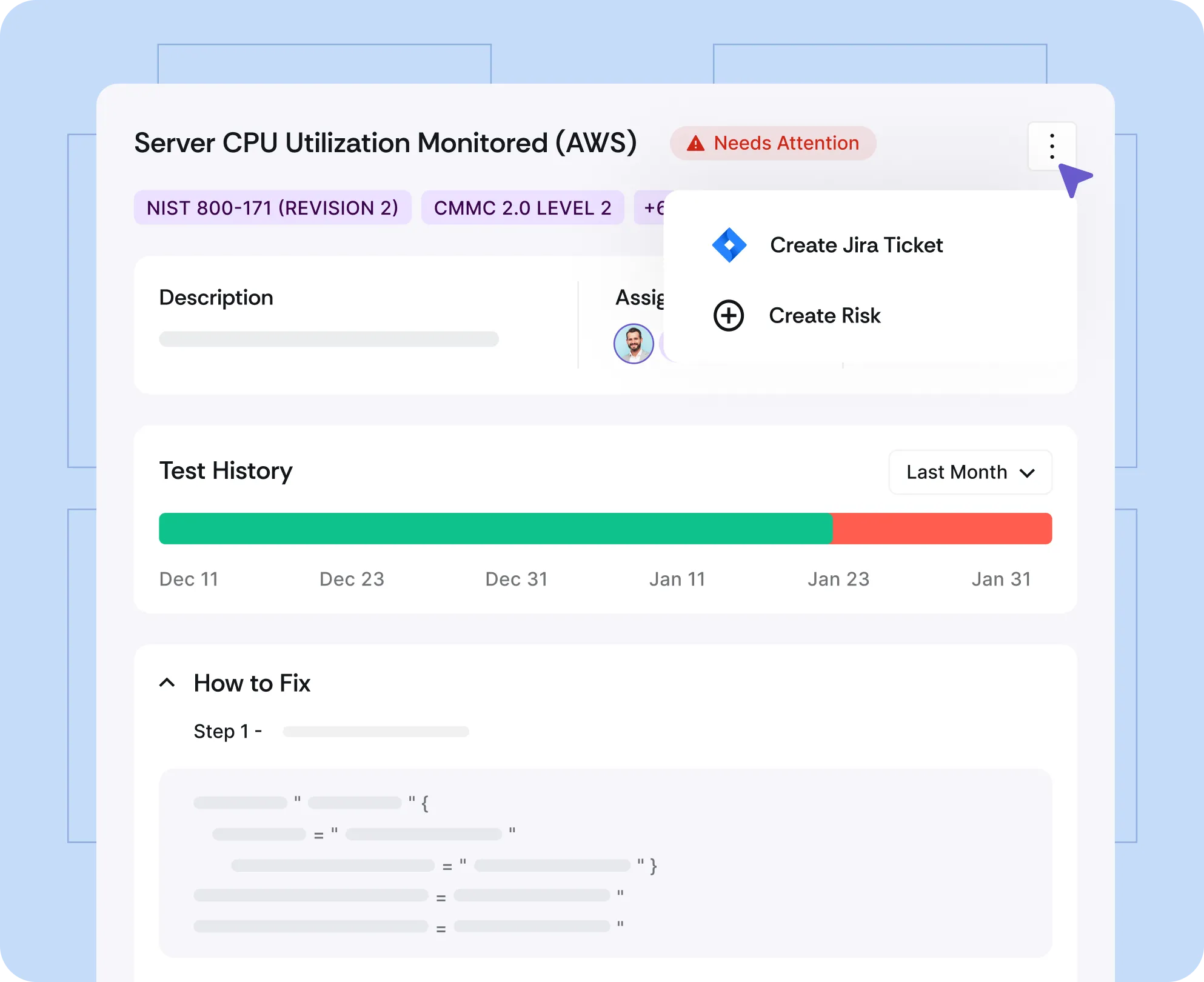
Run automated tests across your tech stack and map relevant controls
Tailor controls to your environment and surface gaps
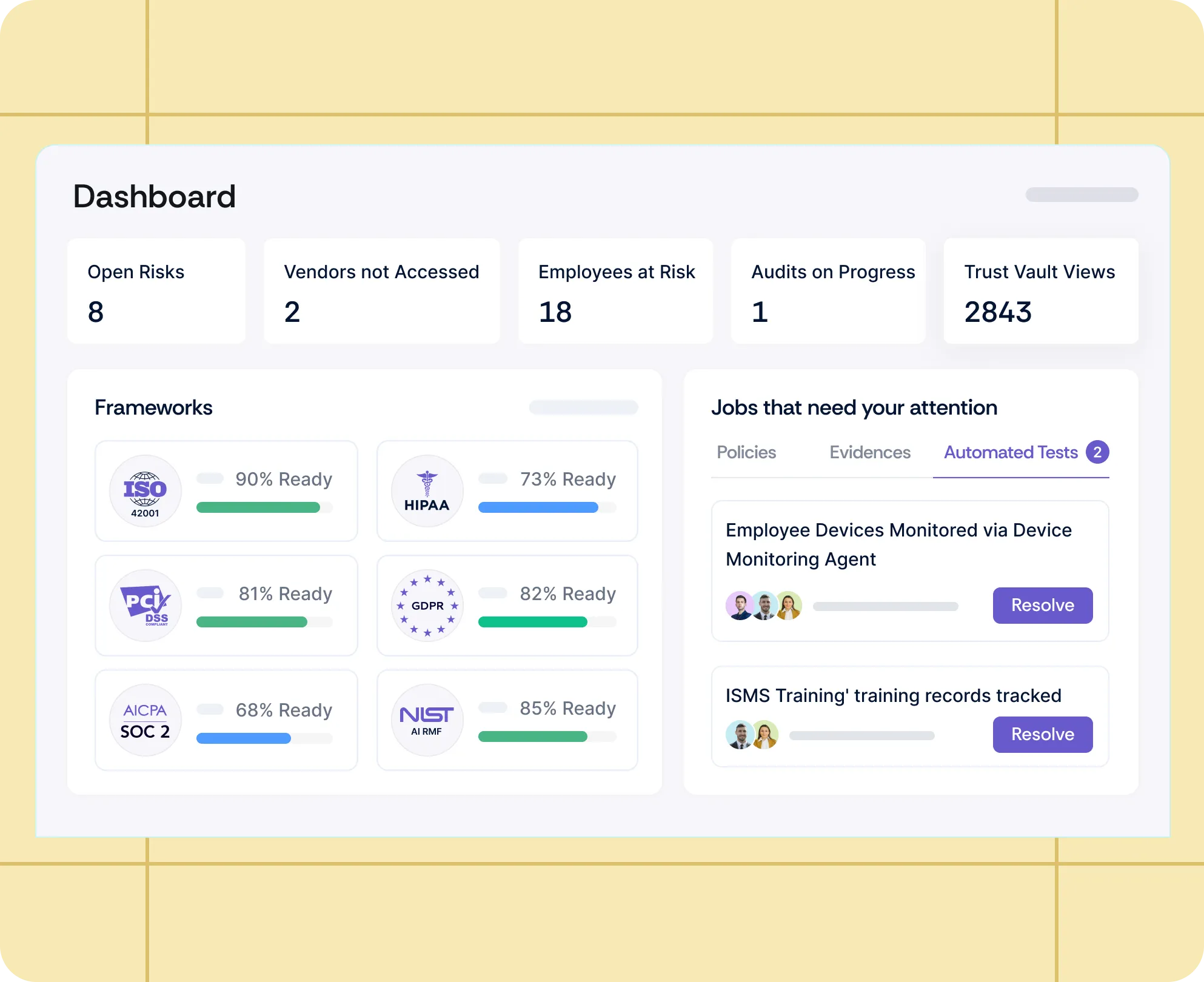
Enjoy continuous monitoring and 24/7 audit readiness
HIPAA was created to safeguard the confidentiality, integrity, and availability of protected health information (PHI). HIPAA compliance is the act of being on par with HIPAA regulations, standards, and implementation specifications, i.e., checking if entities are following HIPAA’s policies to meet its standards for data security and privacy.
HIPAA requires “covered entities” to implement security and data privacy controls to protect patient’s health information from unauthorized access. HIPAA rules apply equally to all types of covered entities, including health plans, health care clearinghouses, and health care providers who are responsible for transmitting healthcare data in a HIPAA-compliant manner. HIPAA compliance is also required for Business Associates who create, access, process, or store PHI.
Information about a person’s past, present, or potential health condition that is gathered from them by a covered entity must be protected because it either identifies the person or there is a good reason to think that it can be used to find, identify, or get in touch with them.
HIPAA is a legal obligation under which all covered entities are mandated to establish security and data privacy controls to protect PHI from unauthorized access. Examples of covered entities required by law to abide by HIPAA regulations include healthcare providers, insurance providers, and clearinghouses. In this context, health care providers include physicians, hospitals, and medical, dental, and vision care facilities.
It can be if the device collects, stores, or transmits PHI (for example, glucose levels associated with a specific person) to a Covered Entity or Business Associate organization. More medical devices, wearables, and IoT devices include built-in microprocessors and WiFi/Bluetooth, allowing them to store PHI data and transmit it to the cloud, where any healthcare entity can access it.
Any business adhering to HIPAA regulations can benefit largely from compliance software. It enables both covered entities and associates to audit their sensitive data and security measures to determine where they are already compliant, where they aren’t, and how to close remaining gaps.
HIPAA violation violates actions such as failing to keep PHI private, inappropriately accessing PHI data, or sending PHI via insecure methods. Individual health information violations can result in fines of up to $250,000 or imprisonment for up to ten years.
While the HIPAA Privacy Rule allows patients to access and manage their own PHI, the HITECH Act expands those rights by enabling patients to obtain electronic copies of their health records, provided that the covered entity keeps those records in that format. Additionally, HITECH forbids businesses from selling PHI unless very specific, limited circumstances apply. This successfully prevented service providers from making money off of treatment suggestions.
The security standards meant for protecting the confidentiality, integrity, and availability of PHI are covered under the HIPAA security rule. It stipulates that covered entities must implement technical safeguards to prevent unauthorized access and related security incidents.
Organizations that create, maintain, or transmit protected health information (PHI) are required by HIPAA to abide by its rules. HIPAA is mandatory, in contrast to SOC 2 and ISO 27001, and non-compliance with the framework can result in hefty fines.
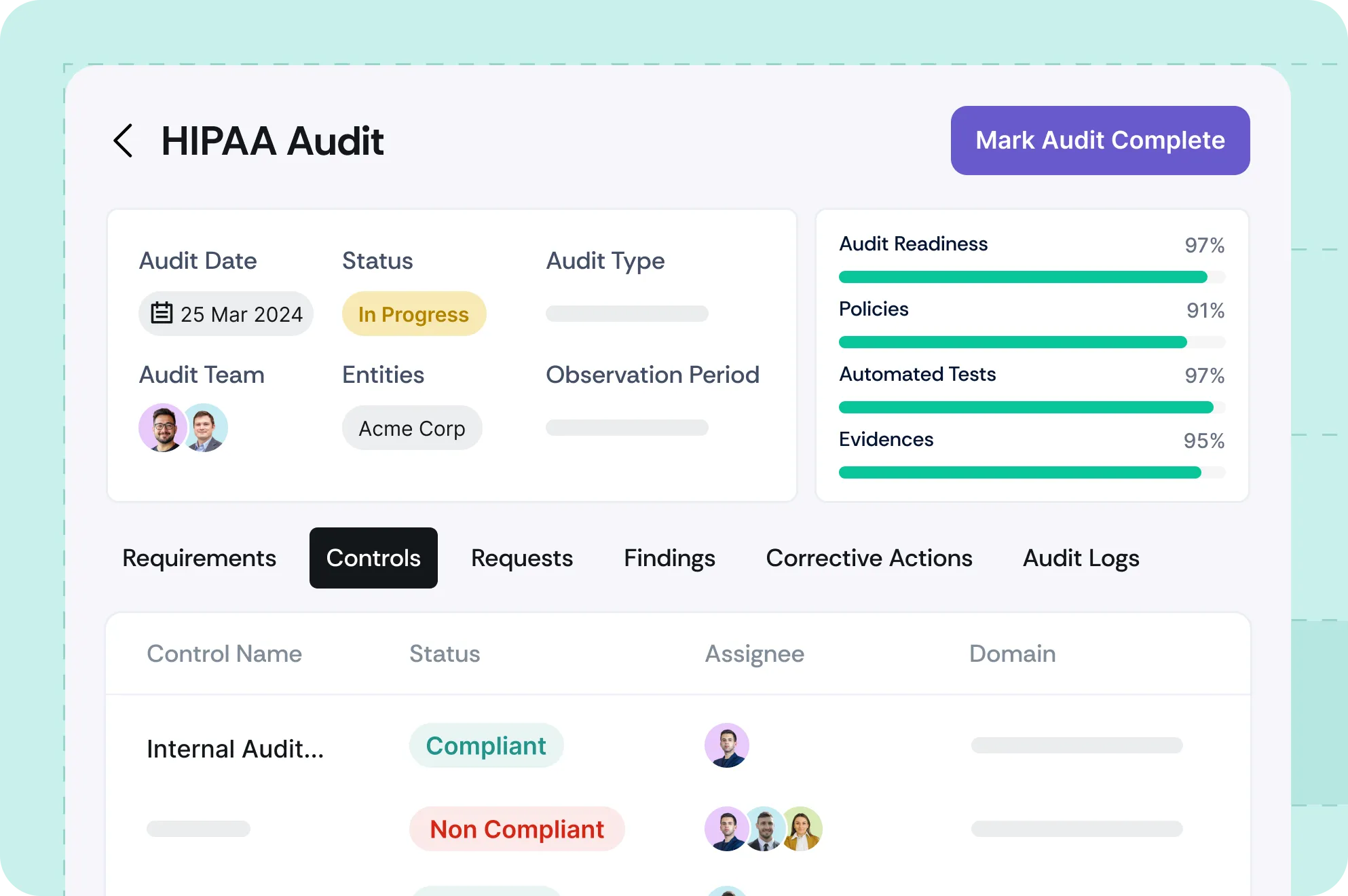
Since HIPAA does not mandate a third-party audit, it is difficult to know your compliance status at any given time. With the help of Scrut Automation’s HIPAA compliance framework, you can maintain compliance easily.